
Are you looking for the best WordPress hosting provider? Are you trying to decide between HostGator and WP Engine? Both HostGator and WP Engine allow you to host your WordPress website with ease. While HostGator offers a few different hosting options, including cloud WordPress hosting, WP Engine is a fully WordPress-focused managed hosting provider.
In this article, we’ll provide you with a direct comparison between WP Engine and HostGator to help you decide which provider is the right solution for your budget and needs.
Table of Contents
HostGator vs WP Engine – Overview

HostGator is one of the most popular hosting providers on the market. It was founded in 2002 and currently hosts over 8 million websites from all over the world.
HostGator offers a variety of hosting options, including WordPress cloud hosting. WordPress cloud hosting is specifically optimized for running WordPress websites and accelerates your hosting performance by 2.5 times compared to a shared hosting platform. At HostGator, you can test the hosting services risk-free for 45 days. If you are not satisfied, you can request a full refund.

WP Engine, on the other hand, is one of the best managed WordPress hosting providers. They are one of the first companies to offer WordPress-centric managed hosting solutions. They have an impressive client list, including Yelp, Asana, National Geographic, PBS, and MyFitnessPal.
Whether you’re running a personal blog or a business that’s experiencing rapid growth, you’ll find the perfect hosting option at WP Engine.
Both are PCI-compliant web hosting companies.
HostGator vs WP Engine – Speed and Uptime
Speed and uptime are the most important factors you need to consider when choosing a web host. Almost every hosting provider guarantees super-fast website speed and high website uptime. To test whether HostGator and WP Engine live up to their hype, we decided to analyze the guaranteed site speed and uptime by signing up with both providers and creating two test sites.
To mirror the production environment on our test sites, we installed WordPress, added dummy content and uploaded some images.
We ran a few different experiments on these test sites using the following tools:
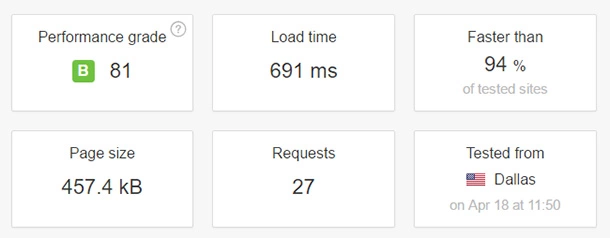
According to Pingdom, our HostGator test site took 691 ms to load when tested from Dallas.
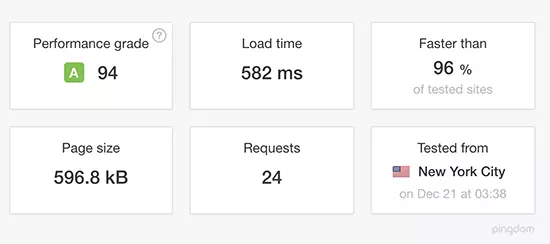
However, our WP Engine test site took only 582 ms to load, which is faster than 96% of all tested sites.
After the Pingdom test, we used a tool called Load Impact to analyze whether the hosting servers would survive a rush of visitors. We sent some virtual users to our websites and gradually increased the number of visitors to 100 at a time to see how the servers would behave.
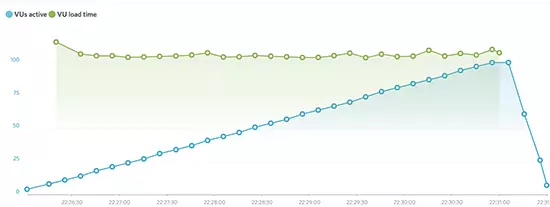
From our test, the number of live visitors does not have a negative impact on the WP Engine website.
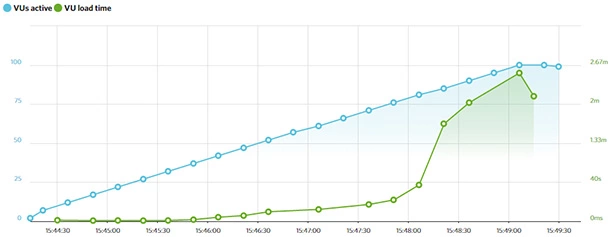
Our HostGator site, on the other hand, responded quickly until it had about 80 visitors at a time. As traffic increased, it slowed down a bit.
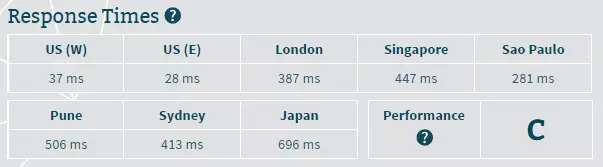
According to our Bitcatcha test, our HostGator server responded in less than a second worldwide. Overall performance was rated C by BitCatcha, while WP Engine was rated A by BitCatcha.
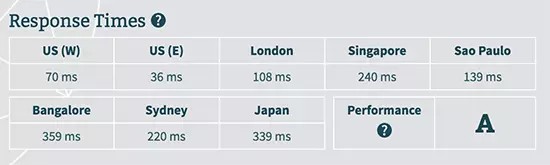
Winner: WP Engine
HostGator vs WP Engine – Ease of Use
Since WP Engine is a managed WordPress hosting solution, you can be sure that your server will be optimized for high performance without having to worry about the technical aspects of server optimization. This means that you can calmly focus on what you’re really good at: publishing content and marketing it.
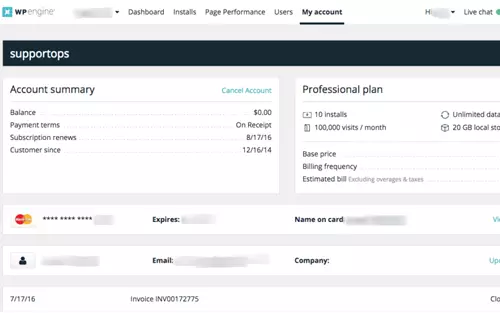
On the other hand, WP Engine platform runs a bit differently than a traditional WordPress hosting platform. For example, you must not install any performance or security plugins to speed up your website, since they have built-in solutions for performance and security.
In fact, you have to learn a bit before you can use WP Engine.
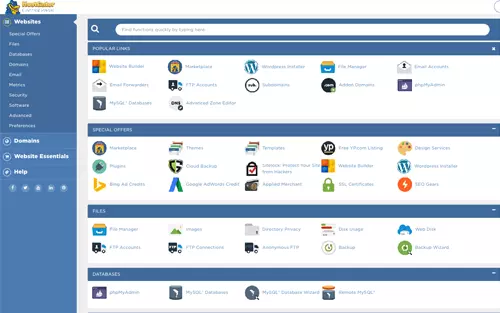
On the other hand, HostGator lets you host your website the way you want. Unlike WP Engine, there are no plugin restrictions. All HostGator hosting plans come with cPanel for managing your hosting files and account. Since it is not a WordPress-specific solution, you can create any kind of website with HostGator.
The 1-click installer makes it easy to install your preferred web hosting software.
Winner: Hostgator
HostGator vs WP Engine – Features
HostGator is primarily aimed at beginners, so you can expect all the essential features beginners need to start a website; including unmetered bandwidth, 1-click installer, a website builder and more.
With the entry-level shared hosting plan, you can host one website; with a slightly more expensive plan, you can host unlimited websites.
Conversely, WP Engine provides everything you need to streamline your WordPress development, marketing, and migration. Let’s take a look at its unique features:
Winner: WP Engine
HostGator vs WP Engine – Support & Documentation
HostGator offers 24/7 support via live chat, phone and email. The extensive documentation includes more than 680 help articles and more than 500 video tutorials that let you explore every aspect of web hosting step by step.
However, WP Engine only offers live chat support with its entry-level package. Phone support is offered with the higher plans. And ticket-based support is provided with their custom dedicated server plans.
Winner: Hostgator
HostGator vs WP Engine – Pricing
HostGator plans start at just $3.95 per month for shared hosting – it also offers VPS, WordPress, cloud, reseller, and dedicated hosting plans. Dedicated hosting is the most expensive, starting at $109.97 per month. These are discounted prices for an annual plan, so look out for renewal costs, plus any additional charges such as domains, CodeGuard backups, and other extras.
The regular price for WP Engine starts at $30 per month. If you want a monthly subscription, then you can get a discount on WP Engine so that you only have to pay $20 per month.
Winner: Hostgator
Conclusion
The ideal customer base for HostGator and WP Engine is completely different. While HostGator focuses on beginners, WP Engine targets specific customer segments such as developers, marketers, SMBs, agencies, and enterprises.
With WP Engine, for example, developers can focus only on development and design without having to worry about hosting maintenance. Similarly, marketers can quickly create and personalize their website using the extensive built-in tools.
HostGator, on the other hand, is ideal for a broader user base and offers a variety of hosting options. Whether you are a seasoned Internet professional or a novice, at HostGator you’ll find the perfect selection of features to get your website started.
FAQs
What factors should I consider when choosing between HostGator and WP Engine?
There are several factors to consider. Firstly, evaluate your website’s needs in terms of traffic, performance, and scalability. Secondly, consider your budget and the pricing plans offered by both hosting providers. Lastly, think about the level of technical expertise you possess or require for managing your website.
Is HostGator a reliable hosting provider?
In my experience, HostGator has been a reliable hosting provider. They offer a 99.9% uptime guarantee, and I’ve rarely experienced any significant downtime with my websites hosted on their servers.
Does WP Engine offer better performance for WordPress websites?
Yes, WP Engine specializes in managed WordPress hosting, providing optimized servers and caching technologies specifically tailored for WordPress. Their performance has been exceptional in my experience, resulting in faster loading times and improved overall site performance.
Which hosting provider offers better customer support?
Both HostGator and WP Engine offer reliable customer support, but WP Engine’s support has stood out for me. They have a dedicated team of WordPress experts who are knowledgeable and responsive, providing quick resolutions to any issues I’ve encountered.
Can I easily scale my website with HostGator and WP Engine?
Both hosting providers offer scalability options, but WP Engine’s platform is designed to handle high traffic and sudden spikes more efficiently. They have built-in scaling features and content delivery networks (CDNs) that ensure your website can handle increased traffic without any performance issues.
To read more similar articles, click here.
Thanks for visiting our Website. If you appreciate our work, kindly show us some support in our comments section. 🙂

Norman Dwemer is a tech blogger who focuses on the future of technology. his blog delves into emerging technologies such as artificial intelligence, blockchain, and quantum computing, as well as their potential impact on our lives and society. Rachel’s writings provide a sneak peek into the future of tech, examining the possibilities and risks of these cutting-edge technologies. he also shares the most recent developments and research in these fields, delivering the latest news and insights to his readers. Norman’s visionary outlook on the world of tech has establihed his as an authoritative figure for anyone interested in the forefront of technology.